



Arkansas Partnerships are still popular choices for entrepreneurs who want to create a business that brings shared responsibility and resources. In Arkansas, partnerships provide a relatively easy means for two or more people to work together without a corporation. Small businesses, professional practices, and family businesses like the simplicity of partnerships.
Many entrepreneurs find partnerships attractive as they allow for flexibility in management and profit sharing. Starting a partnership is easier and has fewer formal requirements than companies. Though partners share the risks, it is necessary to understand what they are legally and financially liable for.
Arkansas Partnerships formed under state law, it is important to know how these things work. Different types of partnerships expose you to varying levels of liability. Making an improper choice of structure can expose partners to risk.
This guide explains the basics of Arkansas Partnerships, compare them with other types of business structures, and hopefully provide tips to help you manage them. This article provides a clear and reliable guide whether you are kickstarting a new venture or formalizing an old collaboration.
Arkansas Partnerships: Summary and Significance
Arkansas Partnerships are arrangements where two or more persons or entities agree to conduct business together. Partners contribute resources such as capital, labor, or expertise. Partners share in profits losses and responsibilities in return.
Partnerships play an important role in Arkansas’s small business world. They assist their local service providers, agricultural companies and professional firms. Partnerships share involvement decision-making that uses combined strengths and skills.
Ease of formation is one of the main benefits of partnerships. When people interact, the partnership starts automatically. A formal agreement is highly recommended to avoid disputes.
Partnerships are also simple for tax purposes. Most partnerships are pass-through entities. Profits and losses passed through to partners, no entity-level tax.
| Feature | Arkansas General Partnership | Arkansas Corporation (C-Corp) |
|---|---|---|
| Ease of Formation | High – No formal state filing is required to start, though a written agreement is recommended. | Moderate – Requires filing Articles of Incorporation and creating bylaws. |
| Management Flexibility | High – Partners typically share equal rights to manage the daily operations. | Structured – Managed by a Board of Directors with day-to-day oversight by Officers. |
| Liability Protection | Limited – Partners have unlimited personal liability for business debts and legal actions. | Strong – Shareholders generally have no personal liability for corporate obligations. |
| Tax Treatment | Pass-through – Profits and losses flow directly to partners’ personal tax returns. | Double Taxation Possible – Taxed at the corporate level, and again on shareholder dividends. |
Types of Partnerships and Legal Organizations
Not all Arkansas Partnerships are the same. There are several types of partnerships recognized under state law. The correct type is chosen based on business goals and risk tolerance.
Partnerships in General
In a general partnership, the management and liability are shared equally by the partners. Any partner can bind the firm by contracts. Using this structure has simple obstacles so that your personal assets are open to business debt.
Partnerships Tied
Limited partnerships are composed of both general partners and limited partners. the managers of the business and assume liability. Limited partners invest but have limited control and liability.
Flexible and modular, these structures provide varying levels of engagement
The legal structure is important as various liability rules differ Timely documentation helps project roles and expectations.
A Comparison with Other Business Structures
Business owners are often look at Arkansas Partnerships versus sole proprietorships and LLCs. Each option comes with pros and cons.
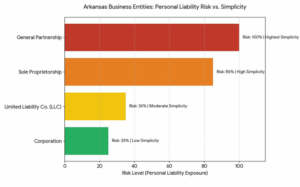
- The Cost of Simplicity: Beginning a business isn’t that complex, as General Partnerships and Sole Proprietorships are very easy to start; but they carry the highest-risk (85%–100%) and that is because there is no legal separation between the business’s debts and your own bank account.
- The Joint Liability Trap: If you form an Arkansas General Partnership, then you are not only liable for your own acts but also 100% liable for business debts and legal mistakes of your partners, making it the least protective entity for personal assets.
- The Corporate Shield: By moving to a Corporation (25% risk) or LLC you get Limited Liability. This legal impediment guarantees that your house, vehicle, and savings cannot be seized by creditors in the event the business is sued or bankrupt.
Partnerships have more collaboration but also shared risk than sole proprietorships. Limited Liability Partnership offer more protection than partnerships, which are easier to form.
For instance, ease and trust may influence two consultants to partner. A bigger venture with assets would prefer that the exposure to liability is limited and thus an LLC is chosen.
Carefully choosing the right structure involves balancing simplicity, risk and growth plans.
Managing an Arkansas Partnership: Choosing Your Lawyer
By establishing well-documented agreements and effective communication, Arkansas partnerships can be managed well. Even if the partners have good relations, a written partnership agreement is essential.
Examine the distribution of profits, who will take the key decisions, and resolution of disputes. It makes things less confusing and protects the relationship.
Practices of management that help
- Clearly defining the roles of partners.
- Maintain detailed financial records.
- Use a business bank account
- Check the contract regularly
Sound financial management of both parties ensures seamless running of a partnership and builds trust.
It is also important to plan for exit. Partnerships should say how to leave or transfer interests. Planning ahead prevents costly rows.
Choosing Wisely with Arkansas Partnerships
Starting and operating on an Arkansas Partnership is an easy and flexible process. They promote teamwork, sharing of resources and management. Corporation Center many entrepreneurs will find this structure a perfect starting point.
Nevertheless, partnerships have shared liability and responsibility. Essential for long-term success, understanding legal obligations and clearly drafting agreements.
They can use Arkansas Partnerships effectively by carefully evaluating their goals, risks and partner relationships. With proper planning and communication, partnerships remain strong and reliable ways to do business in Arkansas.