



Alabama Professional Associations are indispensable for licensed professionals who wish to work together in compliance with state law. There are a few types of entities that are designed for use by professionals like doctors, lawyers, engineers, accountants, and other licensed experts. Allowing specialists to cooperate, share, and exhibit a complete business organization, all the while ensuring the professionalism of everyone taking part.
Professional associations are governed by rules that ensure public trust unlike business entities. According to Alabama law, these organizations must stay within certain limits that apply to licensure and ethics. Unlike typical corporations or limited liability companies, this characteristic is what sets them apart.
In Alabama, professionals ensure the structure they choose isn’t merely a form. Liability exposure, taxation, management flexibility, and long-term growth are all impacted. A professional association is a regulated body that ensures collective action.
Alabama Professional Associations are explained in this guide. It explains their purpose, legal framework, differences with other entities, compliance steps, and best practices. Knowing these matters helps professionals make decisions and stay compliant during their business life.
Understanding Alabama Professional Associations
Alabama Professional Associations are business entities legally created for licensed professionals. They serve the purpose of creating a formal structure that complies with licensing laws. Only individuals with a valid license in the same profession can form or join such associations.
The main objective of a professional association is to enable professionals to carry out their activities under one legal umbrella. This model provides shared governance, identity and efficiency. Simultaneously, it preserves accountability for the individual services provided.
In Alabama, these associations must indicate their professional purpose. They should not do commercial activity that’s unrelated. This restriction ensures that the entity concentrates only on regulated professional services.
From the viewpoint of governance, professional associations are often like corporations. They are equipped with officers and directors along with formal governance documents. Nonetheless, only licensed individuals are permitted to own and manage.
| Feature | Professional Association | General Corporation |
|---|---|---|
| Ownership | Licensed professionals only | Any eligible individual |
| Purpose | Regulated professional services | Broad commercial activities |
| Licensing oversight | Required | Not required |
| Compliance level | Higher | Standard |
Legal and Operational Requirements in Alabama
Alabama Professional Associations are governed by statutory and regulatory requirements. Compliance starts at formation and continues throughout the entity’s life. Essential to success over the long term.
Licensure verification is a basic requirement. All members shall hold active licenses in the profession concerned. When a non-physician owner loses their licensure, the ownership or participation must be promptly resolved.
Another key requirement is naming conventions. The name of the association must reflect its professional nature. This clarity safeguards the public and sets the organization apart from companies.
Internally governed rules should be followed professionally. These include keeping accurate records, calling meetings when necessary and upholding professional standards.
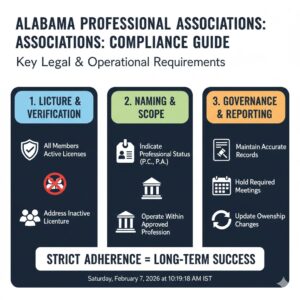
Key compliance obligations include:
- Maintaining valid professional licenses
- Operating only within the approved profession
- Following governance and reporting rules
- Updating records when ownership changes
Failure to meet these requirements can result in penalties or administrative action.
Comparing Professional Associations to Other Business Structures
Choosing Alabama Professional Associations over other structures requires understanding the differences. Each entity type serves different goals and risk profiles.
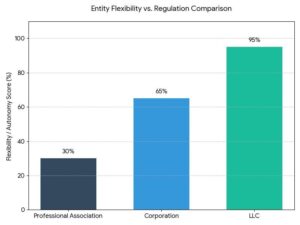
- The professional association system exhibits the lowest flexibility score due to its high regulation, which ensures that licensed professionals (e.g. engineers and doctors) take personal responsibility for their work while sharing administrative infrastructure.
- Corporations being 65% are a balanced option with reasonable flexibility. A registered corporation allows a wide ownership and formalized governance but rules of professional conduct usually restrict their use to a licensed area.
- The LLC is a flexible structure that offers substantial freedom in the way that you manage it and distribute profits. Nonetheless, its high flexibility can occasionally clash with the stringent professional requirements of licensure, which demands Association-like rigidity.
According to this comparison, prescribed professions fit professional associations.
Practical Tips for Forming and Managing a Professional Association
Operating Alabama Professional Associations successfully requires proper planning. It is important for the professionals to first check their eligibility.
It’s also critical to draft clear governance documents. These documents give a clear outline of management roles, decision making and resolution of dispute. Well-defined regulations lessen internal disputes.
Give continuing compliance all the priority you can. Frequently, reviewing your licenses, records and practices can prevent a violation. Avoiding being passive minimizes administrative risk.
Helpful best practices include:
- Verify licenses before adding members
- Maintain organized corporate records
- Schedule regular compliance reviews
- Consult professionals for regulatory updates
These steps support stability and growth.
The Value of Alabama Professional Associations
In Alabama, professional associations of Corporation Center are a legal way for licensed professionals to cooperate. Regulatory accountability is balanced with efficiency.
Understands the legal framework, operational requirements and strategic advantages of this structure so that professionals can use it effectively. Effective management helps maintain compliance and upholds reputation long-term.
A professional association is more than a business entity for licensed professionals in Alabama. This is the basis for responsible practice, collaboration, and sustainable growth.