


An Oklahoma Professional Corporation is a type of corporation available in the the state of Oklahoma. They are suited mainly to licensed professionals. In Oklahoma, numerous doctors, lawyers, accountants, engineers, and other types of professionals use this form to organize their practice in accordance with state licensing rules.
Professional corporations exist for industries in which services require a state license. Distinction affects ownership, management, and compliance obligations. Deciding on the right structure is a business and regulatory decision for professionals.
An Oklahoma Professional Corporation protects professionals’ personal assets from some of their business liabilities. Similarly, it provides clarity on ownership, governance, and long-term planning within a framework. The idea behind this balance is to appeal to practices that are going to grow or add partners.
This guide explains how an Oklahoma Professional Corporation works, how it compares to other structures and practical steps for formation and management. This article helps you if you are opening a fresh practice or restructuring your existing one, in a clear and professional way.
Overview and Importance of an Oklahoma Professional Corporation
A professional corporation in Oklahoma is a company duly organized under the laws of the state and owned by licensed people. Only qualified persons may hold shares or provide services through the corporation. This condition is to maintain professional standard.
Credibility is one of the primary reasons why professionals choose this structure. Smooth, easy-going, complaining through the comment card again, with a ‘Not Again’ tag. Ownership change is also supported by it.
Liability separation is another key benefit. Professionals may liable for their own malpractice, but the corporation can limit exposure for business debts and other contractual obligations. This recognition is an important tool for developing practices.
Governance, indeed, is supported by professional corporations. The functions of shareholders, directors, and officers are defined. These arrangements assist in decision-making and strategy for the long term.
| Feature | Oklahoma Professional Corporation | LLC | Sole Proprietorship |
|---|---|---|---|
| License required | Yes | Sometimes | Yes |
| Ownership restrictions | Licensed professionals only | Flexible | Single owner |
| Liability protection | Partial | Broad | None |
| Credibility | High | High | Moderate |
Legal framework, ownership and governance
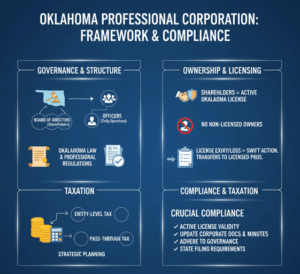
The corporate governance principles of an Oklahoma Professional Corporation add licensing requirements. State-approved professional license must be held by the shareholders. Ownership of Shares by Non-licensed holder is not Permissible.
A board of directors runs the corporation and is usually made up of shareholders. Every day the officers manage the operations of the association while the board oversees. This division of roles fosters transparency as well as organized management.
Essential for clear docs. Articles of incorporation create the corporation; bylaws define its governance rules. The documents must comply with company law and professional regulations.
Regulations About Owning and Licensing
Professional standards are protected through ownership restrictions. Only licensed individuals in the same profession can hold shares. This stops outside influence from interfering with your ethical duties.
It is important to keep valid licenses. When a shareholder loses their license, the company must settle ownership issues as soon as possible.
Obligations Undergo Changes
Starting and operating an Oklahoma Professional Corporations involves compliance at both the professional and corporate levels. Corporations must comply with state corporate requirements and ensure that all professionals hold proper licenses.
Courts may subpoena the governing processes and records of professional corporations. Consistent meetings and recorded choices maintain clarity.
Tax plus Legal Requirements
Specific tax rules apply to professional corporations. Based on elections made by the corporation, it may be subject to entity-level taxation or pass-through treatment. Business owners can align tax and commercial goals through strategic planning.
Responsibilities of compliance key
- Keeping occupational permits valid.
- Updating company documents.
- Adhering to governance procedures.
- Fulfill state reporting obligations.
Making sure to comply keeps both the company and its shareholders safe.
Comparison with Various Other Business Structures
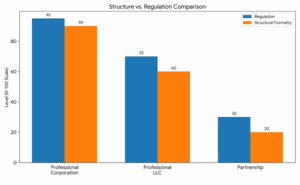
- Professional corporations are the most formal and regulated structure. They are suitable for complex organizations including medical groups that require all the operational roles to be clear.
- Professional LLCs: A compromise between corporations and partnerships. LLCs tend to have a limited amount of regulation while giving up corporate structure. This is often optimal for small-to-medium-sized consulting practices.
- Partnerships are relatively the simplest form of business structure, which is why they have the lowest level of structural formality and regulatory burden. However, it also exposes the owner to a higher level of personal risk.
Practical Tips for Forming and Managing a Professional Corporation
Successful formation starts with verification. Confirm that all owners possess the necessary licenses. It helps in preventing delays and compliance issues.
It is essential to plan governance documents carefully. Bylaws should cover transfer of ownership, decision-making, and resolving disputes. Well-defined guidelines mitigate disputes.
Practices that help you manage
- Conducting frequent board meetings.
- Monitoring license validity.
- Organize financial statement analysis.
- Envisioning new ownership changes.
- The policies ensure sustainability and encourage success.
A key item to think through is succession planning. Professional corporations should plan for retirement and ownership changes to protect the future of the practice.
Is a Professional Corporation in Oklahoma Right for You?
Corporation Center gives licensed professionals a formal and credible method to operate their practice. It maintains business organization and planning alongside professional regulation.
Professionals can use this structure effectively if they know ownership rules, compliance duties, and governance requirements. Growing responsibly while keeping integrity at the forefront.
A Professional Corporation in Oklahoma is a valuable and effective business structure for licensed people who want structure and credibility.